Stay comfortable even at -15°C! A summary of building specifications and anti-freezing measures to survive winter in Karuizawa

── Introduction: The dream of living in Karuizawa, but the biggest concern is the harsh winter

Living in the naturally rich Karuizawa and building a vacation home. When people start thinking about making that dream a reality, they often face the reality of the cold winter. This article is brought to you by our design advisors to help alleviate concerns about winter living and help you enjoy life in Karuizawa with peace of mind.
Karuizawa is located at an altitude of about 1000m, and its winters are harsher than you might imagine. The average midwinter temperature is -3°C, the average minimum temperature is -8°C, and it can sometimes drop as low as -15°C.
In such a harsh environment, serious problems such as frozen and burst water pipes and damage to the building itself can occur. In this article, we will explain in detail specific "freezing countermeasures" to help you spend the harsh winter safely and comfortably, as well as the standard specifications for buildings provided by Forest Corporation.
INDEX
Why is anti-freezing important? Possible winter troubles in Karuizawa
・Risk of water pipe bursting
- Damage to buildings (freezing)
What is the conventional solution, "draining water"?
Forest Corporation's multi-layered freeze measures
Countermeasure 1: Improve the foundation to protect the building
Countermeasure 2: Specifications for "equipment" to prevent freezing
Countermeasure 3: A "heating plan" that gives you peace of mind even when you're away
Countermeasure 4: "Airflow Method" to keep the whole house warm
1. Why is anti-freezing important? Potential winter troubles in Karuizawa
What problems can occur if you neglect to take measures against freezing? Here are two typical problems that can occur in winter in Karuizawa.
The risk of water pipe bursting is what we are most wary of.
When the outside temperature drops below freezing, the water remaining in the water pipes freezes and expands. This force is so strong that it can burst the water pipes themselves, as well as the water heaters and faucets connected to them. Not only will repairs be expensive, but if the leak occurs while you're away, it could also lead to secondary damage.
Damage to buildings (freezing)
The cold of winter not only affects pipes, but the entire building. "Freezing up" is a phenomenon in which water underground freezes and expands, pushing up the ground itself. This can lift the foundation of a building and cause the entire house to warp. Once distortion occurs, it can make it difficult to open and close doors and windows, and in the worst case scenario, it can cause serious damage to the safety of the building.

2. What is the traditional solution of "draining water"?
For many years, the time-consuming task of draining water has been a major concern for owners of villas in Karuizawa. This was especially necessary for older villas with poor insulation, as it was a necessary task when leaving the building in winter.
in particular,
1. Turn off the main water valve.
2. Open all the faucets in the house.
3. Open the drain valve and drain all the water from the pipes.
4. Inject antifreeze into areas where water collects, such as the toilet bowl and drain trap.
Perform a series of tasks such as:

This is a very time-consuming job and often requires the services of a professional.
However, please rest assured. Modern housing technology has dramatically changed this common sense. In Forest Corporation's new construction properties, such extensive work is basically unnecessary thanks to the multi-layered measures described below.
3. Forest Corporation's multi-layered freeze measures
Our anti-freezing measures do not rely on a single component or piece of equipment. We have built a multi-layered defense system that blocks all routes for cold air to enter at four levels: from the ground, throughout the building, through the piping itself, and from the indoor space.
Countermeasure 1: Improve the foundation to protect the building
The foundation that supports a building is the first step in preventing freezing. The concept of "freezing depth" is important here.
The frost depth refers to the depth below the ground surface where the ground will not freeze. If foundations or water pipes are located shallower than this depth, there is a higher risk of building distortion and pipe freezing due to "freezing up."
Even within Shinshu, Karuizawa has an exceptionally deep freezing depth.
Karuizawa Town: 750mm to 1,000mm
• Ina City: 600mm
• Nagano City: 450mm

Our "Karuizawa specification" foundations are constructed deeper than the freezing depth of 750mm to 1,000mm , preventing the effects of freezing at the source. The horizontal hot water and cold water supply pipes that draw water into the building are also installed deeper than the freezing depth to prevent freezing. Additionally, a 30mm thick insulation material is laid under the concrete floor of the building, providing a double measure to shut out cold air coming in from the ground.


Countermeasure 2: Specifications for "equipment" to prevent freezing
We have taken thorough measures not only for the structure of the building but also for the water supply equipment itself.
• Water and hot water supply pipes with built-in heaters
The Karuizawa specification uses cross-linked polyethylene pipes with built-in anti-freeze heaters for the cold and hot water supply pipes. These heaters automatically switch on when the outside temperature drops below 5°C, gently warming the pipes to prevent them from freezing.

• "Header construction method" with excellent maintainability
This is like installing a "plumbing junction box" behind the wall of your home. Individual pipes branch off from the main pipe to each faucet, so if a leak occurs in the kitchen, you can quickly repair or replace just the one pipe going to the kitchen without having to shut off the water to the entire house or make major damage to the wall.

• Faucet equipment for cold regions
With standard equipment, there is little risk of freezing, but in the unlikely event that you are away for an extended period of several months, all of the faucets are designed for cold climates so that you can drain the water.

Countermeasure 3: "Airflow Method" to keep the whole house warm
A common weakness of highly insulated homes is that they are unable to expel heat once it has entered. In contrast, our "Airflow Construction Method" is a technology that allows you to "change the look of your home," so to speak.
In winter, close the ventilation vents (dampers) installed under the floor and in the attic. This seals off the air passages within the walls, creating a layer of still air. This still air is one of nature's best insulators. The entire house is wrapped in it like a down jacket or a thermos, acting as a **natural insulating layer**.

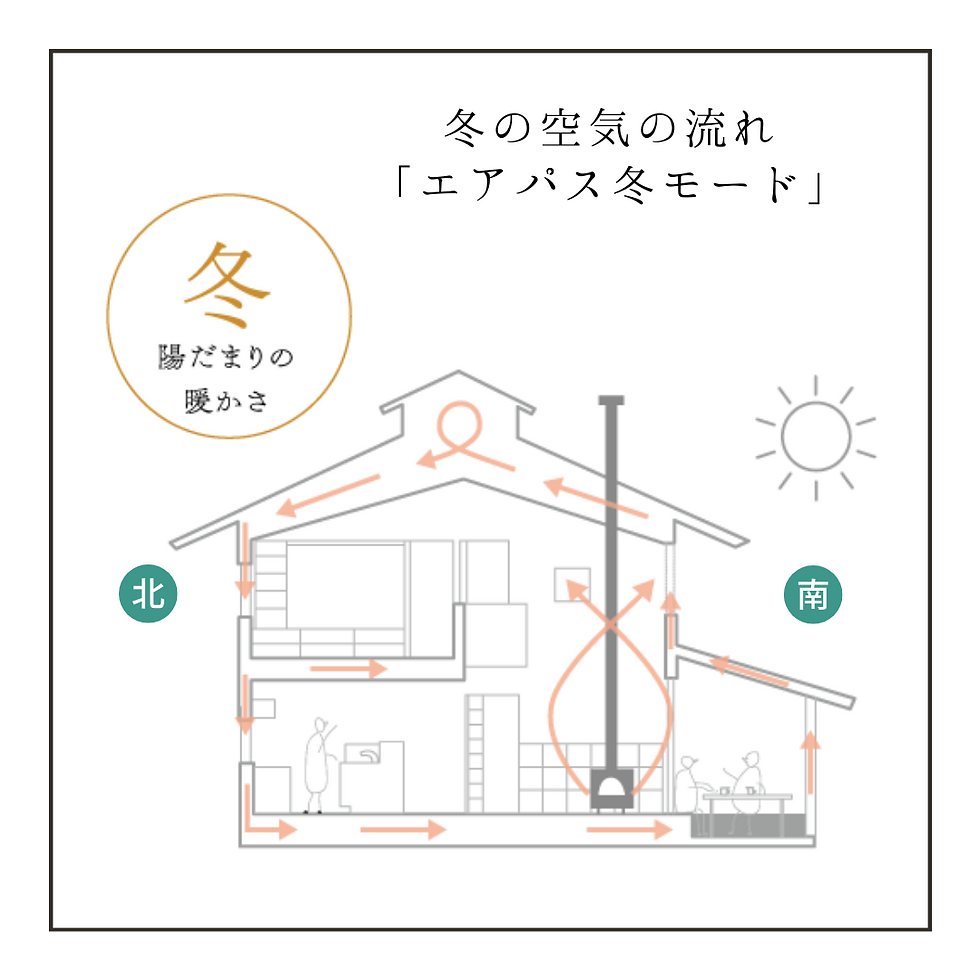
This effect eliminates temperature variations throughout the building, and toilets and washrooms on the north side, which tend to be cold, and even closets, are kept at roughly the same temperature as the living room.With no extremely cold spots within the building, localized cooling of pipes is prevented, significantly reducing the risk of freezing.
Countermeasure 4: A "heating plan" that gives you peace of mind even when you're away
One important measure against freezing is to "not cool down" the building completely. After the foundation insulation and airflow construction method have improved the heat retention of the entire house, the last resort is "not cool down" heating using panel heaters.

Panel heaters excel at "no cooling" operation, which gently maintains a low temperature and keeps the room warm. In particular, the "anti-freeze" operation, which keeps the room temperature at around 5-10°C, is ideal for when you are sleeping or away for an extended period of time. This allows gentle warm air to reach pipes in hidden areas such as inside walls and under floors, reducing the risk of localized freezing to almost zero.
Panel heaters also offer the following benefits:
• Windless and silent : Since it does not use a fan, it is quiet and produces no wind or noise.
• Less dry : Since it does not directly heat the air, the room is less likely to become dry and more comfortable.
• No dust : No air currents create dust and allergens.
4. [For owners] At the very least, this is all you need! A checklist for when you're away in winter
Forest Corporation buildings are equipped with advanced anti-freeze measures, but to be on the safe side, there are some basic precautions that we ask that owners take themselves. Please check the following points, especially if you will be away from your home for more than two days during the winter (December to March).
• Do not trip the breaker.
The anti-freeze heater built into the pipes is electrically powered, so make sure the main breaker is left "ON" so the heater can operate.
• Close the air path vents
Close all air-pass vents under the floor and in the attic. This puts the building into "winter mode" and maximizes insulation performance.

• Keep the bathtub filled with water
Water heaters have a built-in pump to prevent freezing. To ensure this pump operates properly, make sure the bathtub circulation adapter (the metal fitting from which hot and cold water comes out) is completely hidden and that there is at least 5cm of water above it .

• Close the drain valve (antifreeze valve) near the water area.
By closing the individual water shutoff valves in the kitchen, under the sink, etc. in the "drain" position, you can protect the fixtures in case of an emergency.

• Drain the garden standpipe.
Outdoor standpipes are at the highest risk of freezing. Be sure to turn the handle all the way to the "drain" position and open the faucet to drain the water inside.

• Keep the heating on in the room
Turn on the freeze prevention function on your panel heater or operate your air conditioner on the "low" heating setting. Also, keep the bathroom door open and take other measures to prevent the entire house from getting too cold, allowing you to get through the winter with more peace of mind.

What is the role of the drain valve (antifreeze valve)?
Drain plugs are devices used to prevent water pipes from freezing in winter.
Freezing can be prevented by discharging hot or cold water from the pipes outside (underground).
The drain valve is installed below the freezing point, which means that the drained water will not freeze even during the winter, so you can rest assured that the drained water will not freeze.
4. Summary
Winters in Karuizawa are not only harsh, but also blessed with a high sunny weather rate of 90%. Our home building process begins with a deep understanding of both aspects.
The foundation is deeper than the freezing point to keep out the cold air from the ground, the air path construction method controls radiative cooling at night, and the maximum amount of sunlight is let into the room during the day. This is not just a collection of measures, but a design concept for coexisting with nature.
Forest Corporation's house
1. A strong foundation constructed deeper than the "freezing depth"
2. "Air Pass Method" keeps the entire house warm like a thermos
3. Automatic heating of pipes linked to the outside temperature
By taking multiple hard (building specifications) measures such as these, the building is able to withstand the harsh environment of temperatures as low as -15°C.
The building's performance (hardware) and proper maintenance by the customer (software) come together to provide a safe and fulfilling life, even in the frigid climate. We hope this article will alleviate your concerns about living in Karuizawa and help you rediscover its charm.
We look forward to seeing you at the "Kobo Shinshu no Ie" Karuizawa showroom !


While we are architectural professionals such as designers and construction managers, all of our employees act as "Shinshu concierges" to support a rich life in Shinshu.


Comments